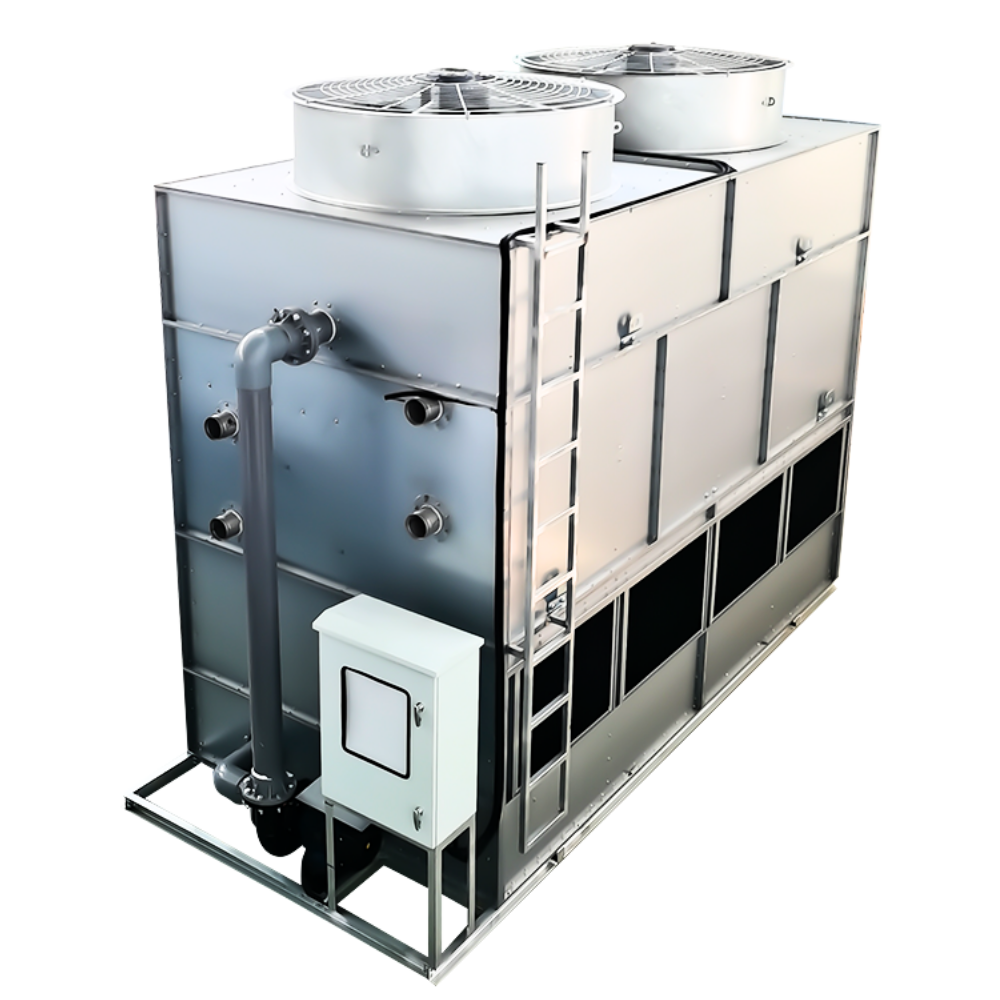
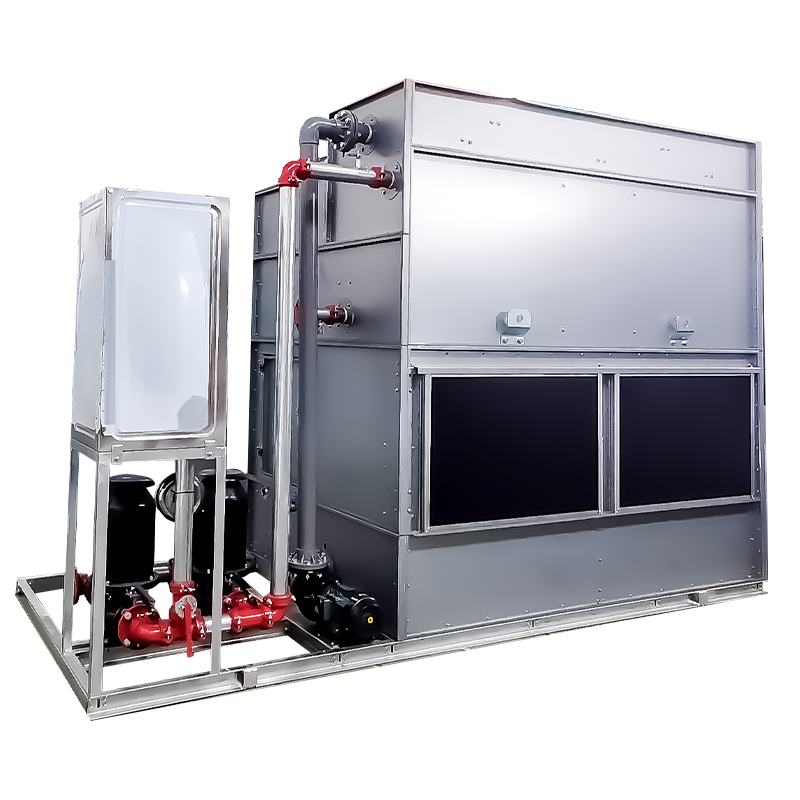
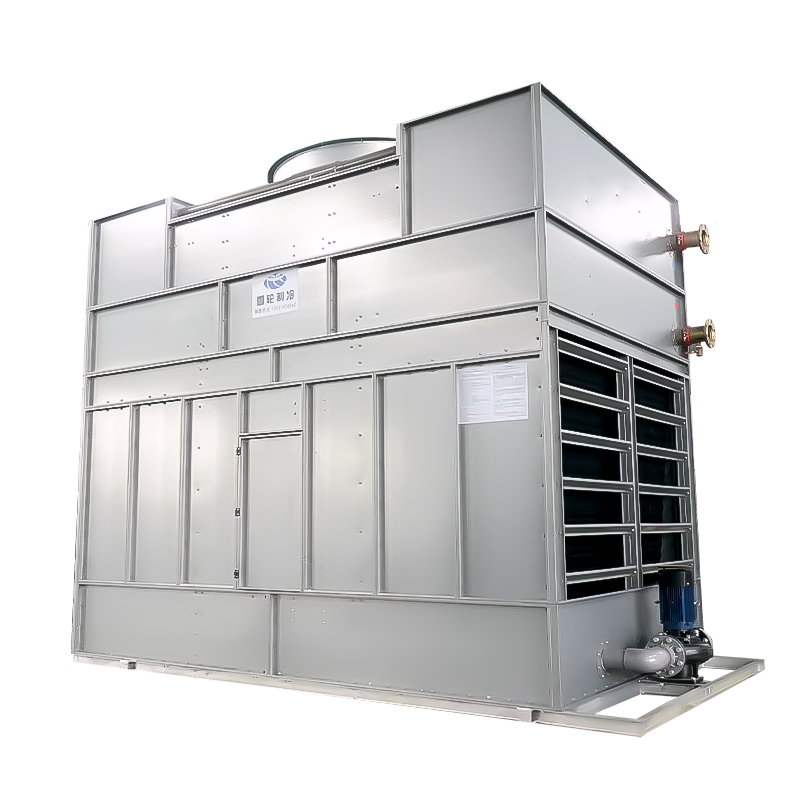
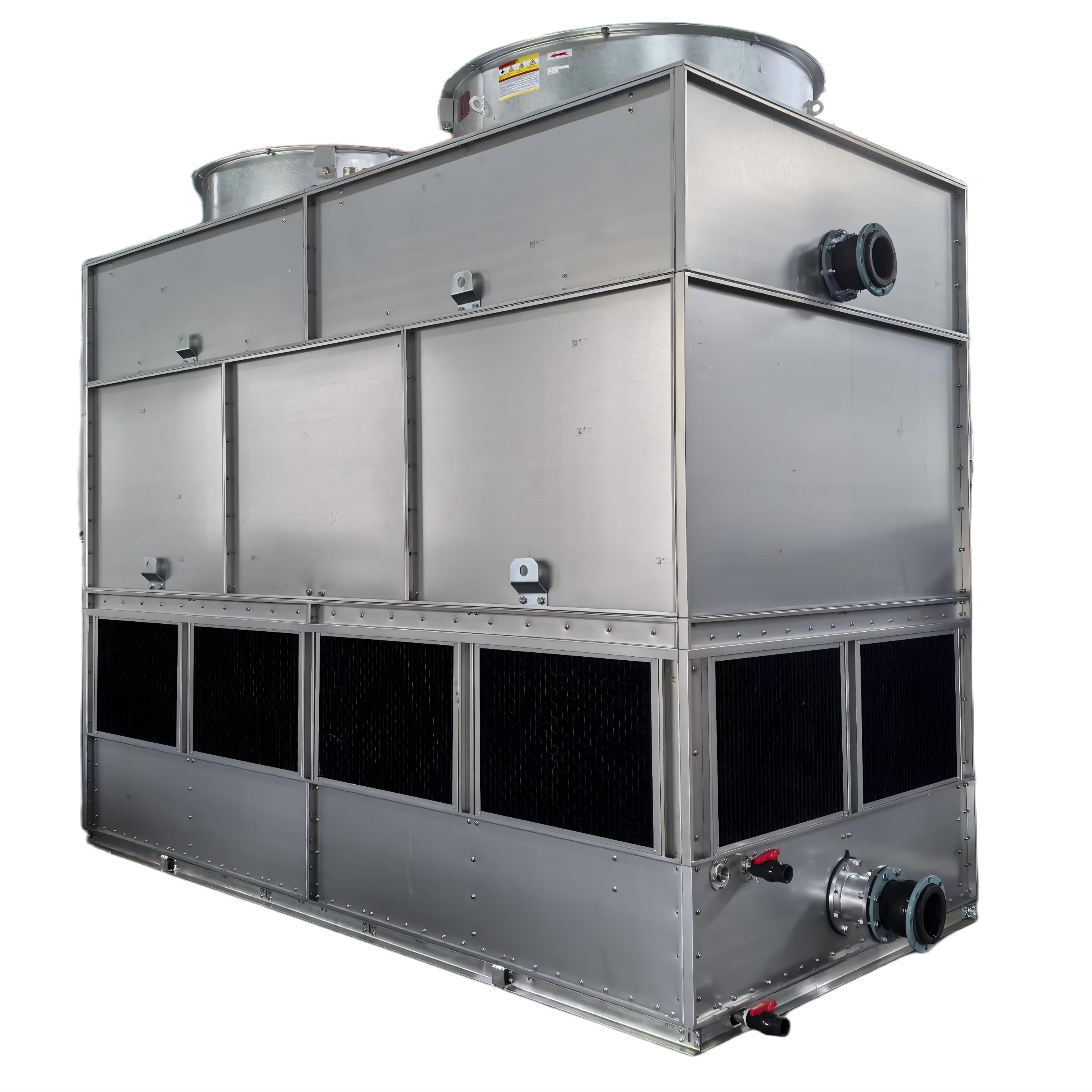
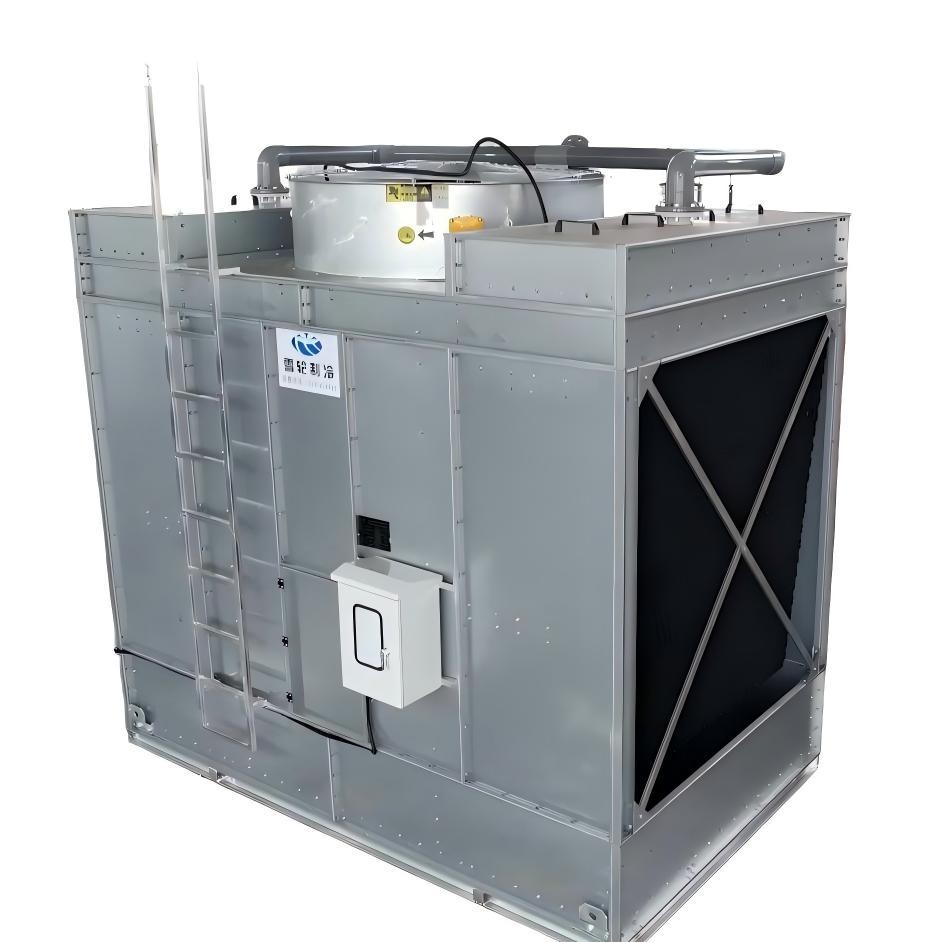
When selecting a cooling tower, the choice between a closed‑circuit (closed) cooling tower and an open‑circuit (open) cooling tower must not be based solely on the equipment purchase price. Instead, the decision should take into account the total life‑cycle cost (LCC), water quality management, footprint, environmental impact, and long‑term operation and maintenance burden. This article examines the subject from five perspectives – typical industry applications, detailed pros and cons, hidden costs, distinctive advantages, and final selection recommendations – to support a rational and well‑informed decision.
1. Typical Industry Applications
Closed‑Circuit Cooling Towers
- Data Centres – IT equipment is extremely sensitive to cooling water quality. Closed systems prevent ingress of dust, microorganisms, and other contaminants, ensuring stable, long‑term operation of precision air‑conditioning systems.
- Pharmaceutical and Bio‑engineering – Process cooling water must meet purity and sterility requirements. Closed towers eliminate external contamination, reducing product risk.
- Fine Chemicals and Food Processing – Reactor jacket cooling and condenser water demand scale‑free and corrosion‑free conditions. Closed towers maintain stable water quality.
- High‑end Commercial Building HVAC – Projects with strict noise, aesthetic, and environmental requirements often select closed towers integrated with building automation systems.
- Rubber and Rubber Compounding – Closed towers provide constant‑temperature, clean cooling water, effectively extending the service life of rubber‑processing equipment and improving product quality.
Open‑Circuit Cooling Towers
- Thermal Power and Nuclear Power Auxiliary Cooling – Large volumes of low‑grade heat must be rejected; open towers harness evaporative latent heat for highly efficient heat dissipation.
- Iron & Steel, Metallurgy, and Foundries – Blast furnaces, rolling mills, etc., require large‑volume cooling water; open towers handle high temperature differences and large flow rates.
- Large Public Buildings (Airports, Exhibition Centres, Shopping Malls) – Where water resources are abundant and maintenance teams are strong, open towers can meet substantial cooling demands.
- Petrochemical Refining and Fertiliser Production – Circulating water flow rates are extremely high; modular open towers facilitate future capacity expansion.
2. Detailed Pros and Cons (Including Hidden Costs and Environmental Factors)
Closed‑Circuit Cooling Towers
Advantages:
- Clean water quality – The circulating water runs in a closed coil, contacting air only indirectly. External particles, algae, and acid gases cannot enter. Softened water or antifreeze solutions can be used safely; the internal circuit never scales and is completely free from fouling.
- Significant water savings – The main circulating water has virtually no evaporative loss; only the spray side has a small consumption. Overall make‑up water is 30 %–50 % less than that of an open tower.
- No need for a concrete basin – Closed towers come with an integral sump or can be placed directly on a flat base, eliminating expensive reinforced‑concrete basins, saving substantial civil works and floor space, and avoiding the extra heat gain caused by summer sun on open pond surfaces.
- Low maintenance costs – No scaling, no biological slime; cleaning intervals are long. Frequent dosing of biocides and algaecides is unnecessary, and labour for maintenance is greatly reduced.
- Long equipment life and environmental friendliness – Coils are predominantly 304 stainless steel, and the casing is all‑metal, offering strong corrosion resistance. Scrap metal is easy to recycle, with no waste‑filler pollution issues.
- Neat appearance and fast installation – Most units are factory‑modularised, ready for lifting into position on arrival. Installation cycles are short, and on‑site assembly work is minimal.
Disadvantages:
- Higher initial equipment cost than open towers (though this must be weighed against savings in civil works).
- Relatively smaller temperature differential; proper sizing is essential.
Open‑Circuit Cooling Towers
Advantages:
- High heat rejection efficiency – Direct water‑air contact allows substantial latent‑heat evaporation, offering strong approach to wet‑bulb temperature.
- Lower unit equipment price (but with additional civil‑works costs).
Disadvantages (including substantial hidden costs):
- Mandatory concrete basin – A reinforced‑concrete sump must be constructed, incurring high civil costs and occupying a large footprint. In summer, heat absorption from the pond surface adds to the cooling load.
- Very high water consumption – Considerable losses through evaporation, drift, and blowdown lead to continuously rising water and wastewater charges.
- Poor water quality control – Softened water or antifreeze cannot be used economically (costs would be prohibitive). Scaling, corrosion, and fouling are inevitable; heat exchange efficiency degrades year by year, with frequent acid cleaning or fill replacement driving up maintenance costs.
- Hygiene risks – Open environments easily breed Legionella and other bacteria, posing health hazards to surrounding areas and personnel; heavy chemical dosing is required.
- Difficult waste disposal – Aged fills and PVC drift eliminators are mostly plastics or composites that are hard to degrade environmentally and costly to dispose of.
- Complex installation – Usually requires on‑site assembly, long erection periods, and is subject to site constraints.
3. Key Decision Point: First Cost Is Not Necessarily “Lower”
Many users mistakenly believe that open towers are “cheaper.” In reality, the total initial outlay is often equal to or even higher than that of closed towers:
- Open tower – The equipment purchase price is low, but a reinforced‑concrete basin must be excavated. Depending on the required water volume, civil costs can add 30 %–80 % to the equipment price, plus extra waterproofing, pipe embedding, and make‑up systems. The combined civil + equipment cost often exceeds that of a closed tower of equivalent capacity.
- Closed tower – The equipment itself has a higher price tag, but no basin is needed – only a level ground foundation. Most units are factory‑modularised, delivered ready for lifting, with clear piping interfaces. Installation labour and auxiliary material costs are noticeably lower than for on‑site assembled open towers. After offsetting these factors, the comprehensive initial investment of a closed tower is quite competitive, and often superior.
4. Unique Core Advantages of Closed‑Circuit Cooling Towers
- Zero basin, space saving – Eliminates large civil‑work expenditure, frees valuable floor space, and avoids energy losses from pond surface heat gain.
- Absolute water quality assurance – Softened water or antifreeze can be used; the internal circuit remains permanently scale‑free and clog‑free, maintaining heat transfer efficiency for a decade or more.
- Extreme water conservation and environmental protection – Water consumption is only one‑third to one‑half that of open towers; chemical dosing is minimised, and scrap (metal) is recyclable, meeting green‑factory standards.
- Isolation from external contamination – Fully enclosed piping keeps dust, insects, and debris out of the user’s process equipment, protecting sensitive processes.
- Aesthetic and durable – All‑metal housing with 304 stainless steel coils, neat and attractive; can be conveniently placed in plant areas or on rooftops, enhancing corporate image.
- Improved process quality – In rubber and compounding operations, stable low‑temperature clean water extends equipment life and reduces reject rates, directly contributing to production value.
5. Suitability Matrix for Different Project Characteristics
| Project Characteristic | Better Suited to Closed Towers | Better Suited to Open Towers |
|---|
| Cooling duty | Small to medium (single unit ≤ 5 000 kW) | Large to ultra‑large (single unit can exceed 10 000 kW) |
| Water quality requirement | Very high (softened water, antifreeze, particle‑free) | Low (general temperature reduction, scaling risk acceptable) |
| Water availability / conservation | Water‑scarce or high water‑tariff areas | Abundant water sources with lenient discharge permits |
| Civil / site conditions | Limited floor space, unsuitable for deep excavation | Sufficient open area and adequate civil budget |
| Climate | Cold winters (needs antifreeze operation) | Humid, hot climates with high wet‑bulb temperatures |
| Operation regime | Year‑round continuous operation, low fault tolerance | Seasonal operation or with standby tower redundancy |
| Maintenance capability | Prefers low‑frequency, high‑reliability maintenance | Has professional water‑treatment team and frequent overhaul schedule |
| Environmental & hygiene requirements | Strict (near residential areas, hospitals, food plants) | Lenient (away from sensitive zones) |
| Waste disposal | Metal scrap is recyclable, no environmental burden | Plastic fills are hard to degrade, high disposal cost |
| Installation timeline | Needs fast commissioning, minimal site work | Construction schedule allows long on‑site assembly period |
6. Overall Conclusion
When your project demands high water purity, efficient water utilisation, operational stability, limited footprint, hygiene safety, and environmental compliance, the closed‑circuit cooling tower is unquestionably the superior long‑term choice. Its apparently “high” price is misleading; once the savings from eliminating concrete basins, water conservation, reduced maintenance, and extended service life are factored in, the total life‑cycle economics far outperform those of open towers.
For ultra‑large‑scale projects with unlimited water supply, low water‑quality sensitivity, and temporary or seasonal operation, open towers can still serve effectively thanks to their simple heat‑rejection principle.
We strongly recommend performing a detailed LCC (life‑cycle cost) analysis before selection, and visiting actual installations with similar operating conditions to review real‑world performance data, so that the technical solution best matched to your specific needs can be chosen.