
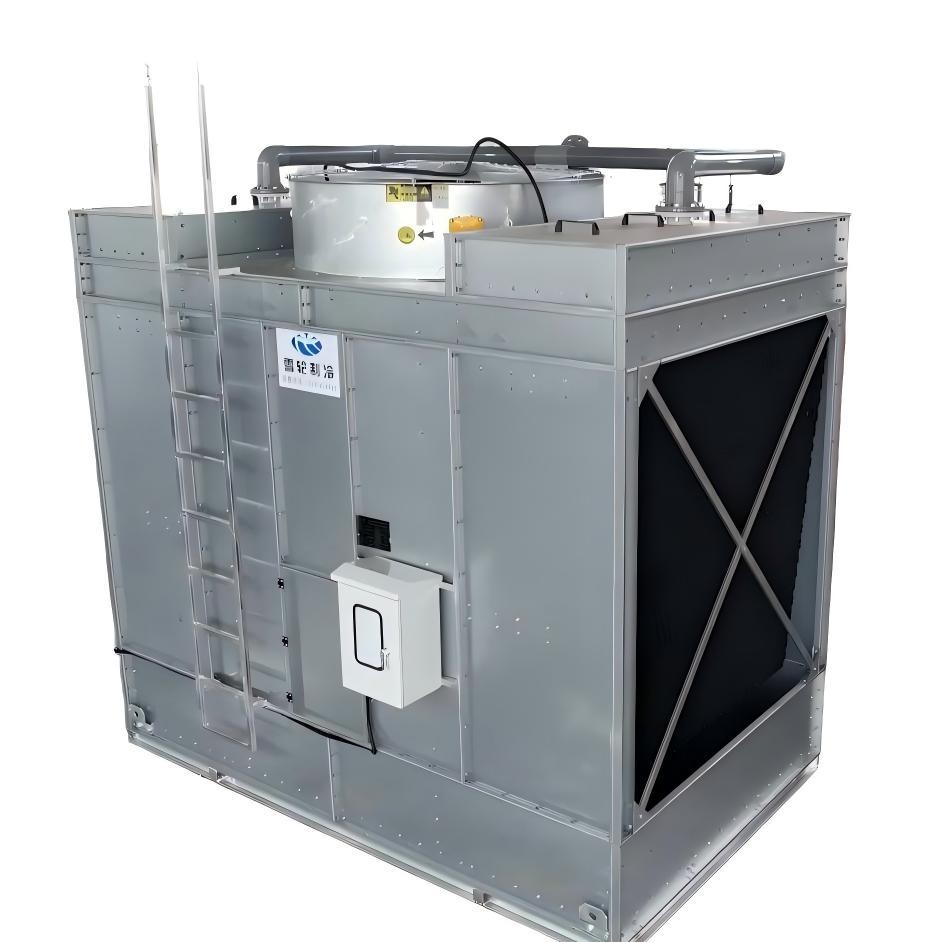
Open or Closed Cooling Tower? A 3‑Minute Read to Understand the Applications and Cost Differences When Choosing Xuelun Cooling Towers
News & Blog
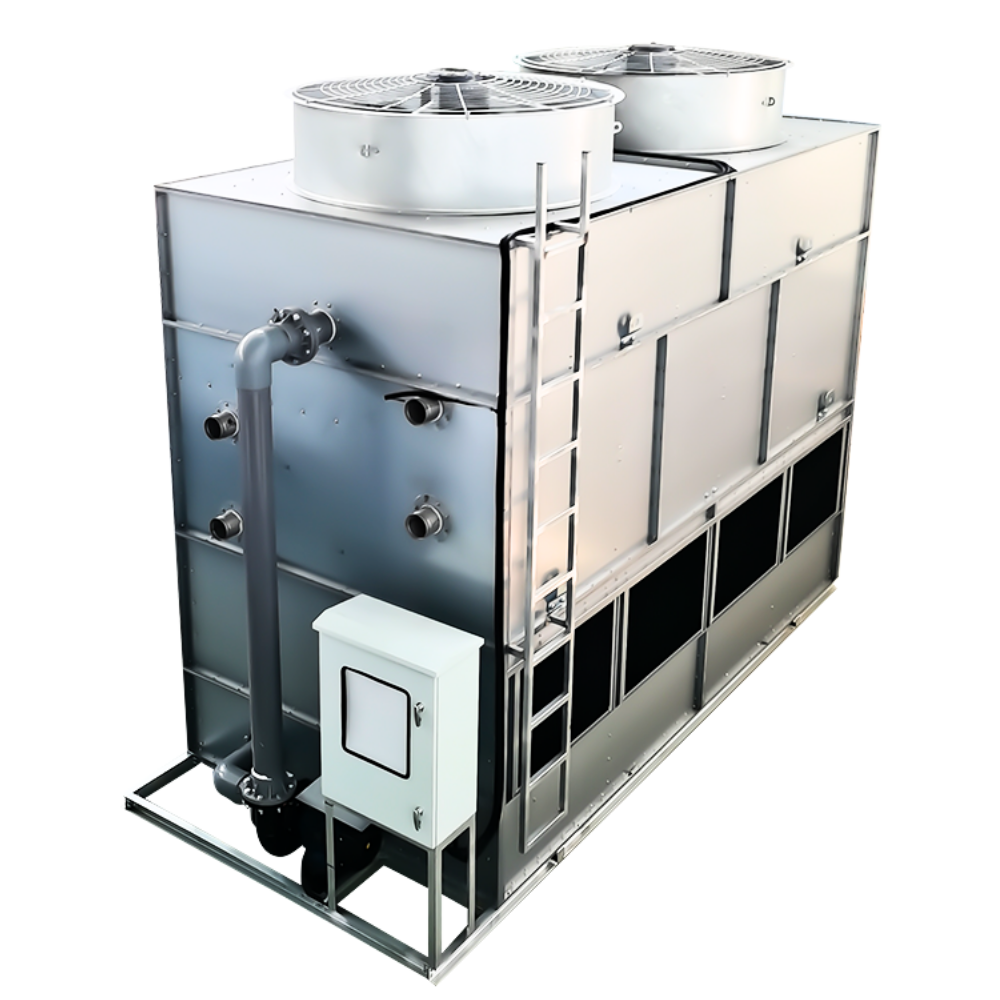
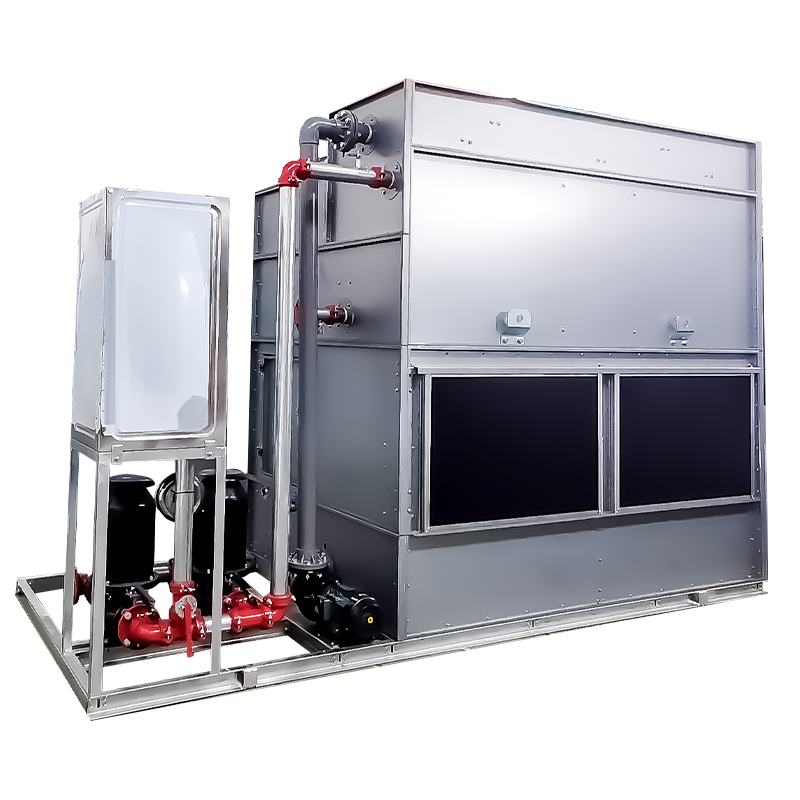
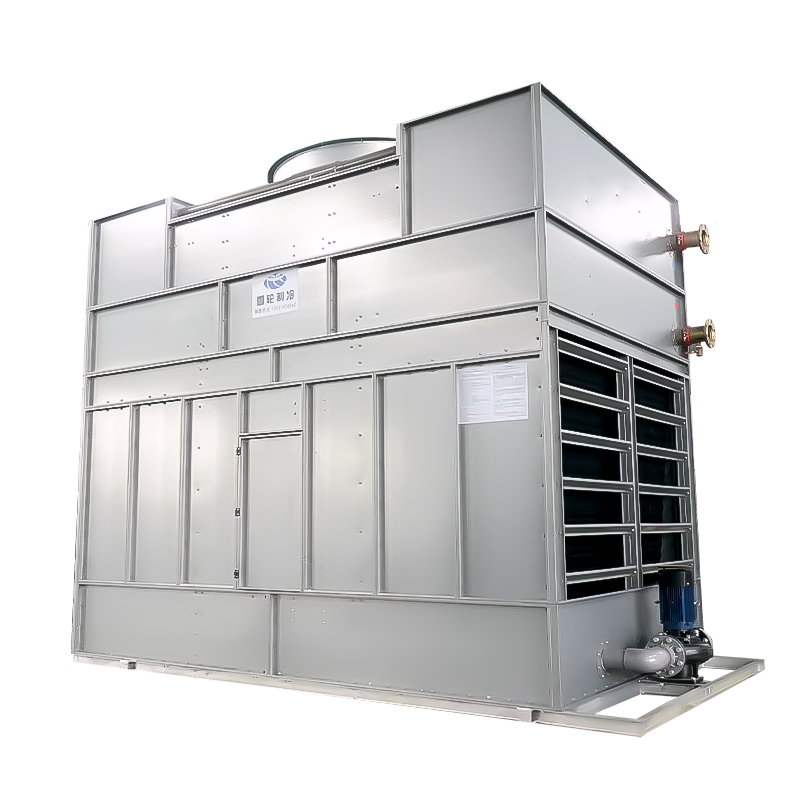
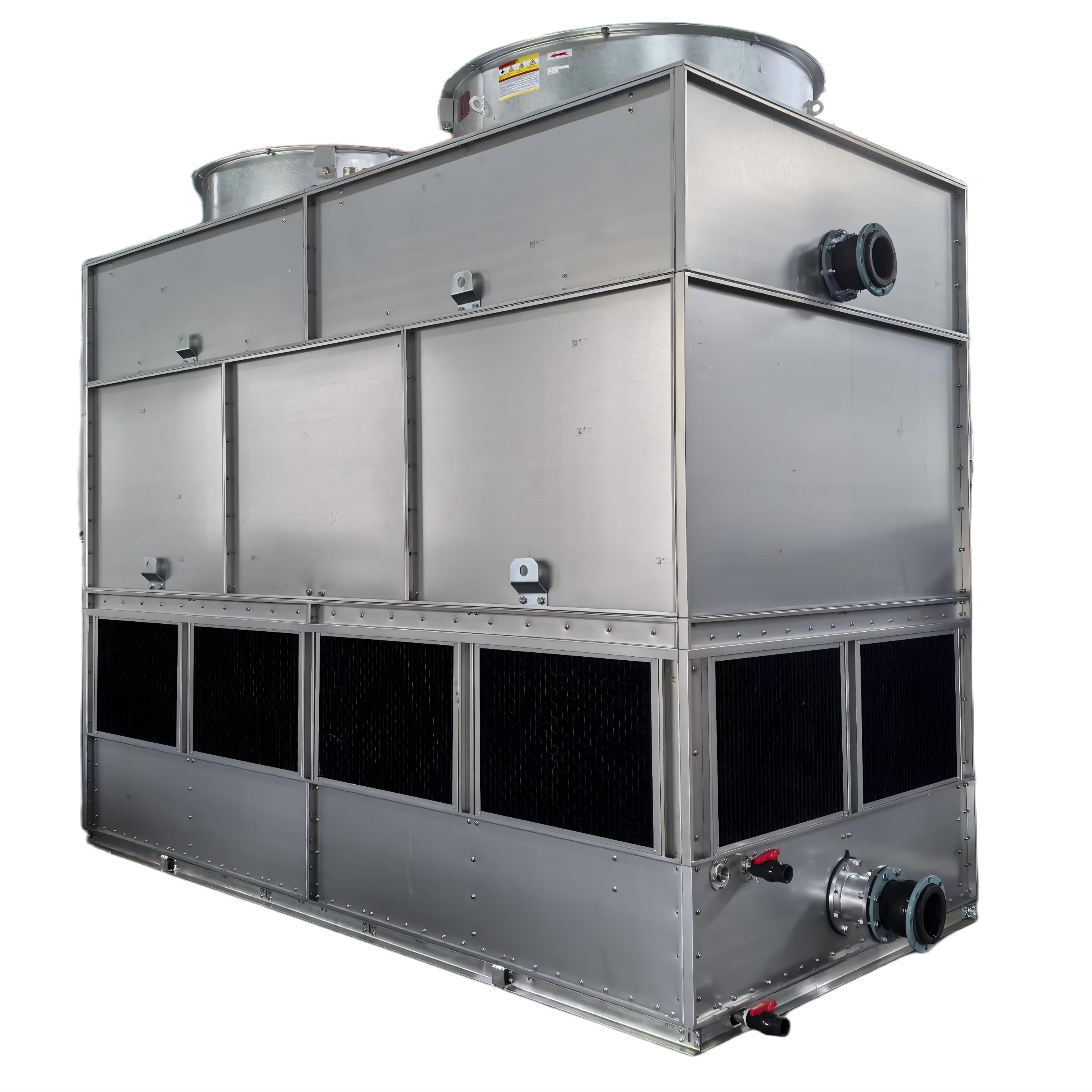
In the premium cooling equipment sector, ZAM-coated steel (Zinc-Aluminum-Magnesium) and 304 stainless steel are increasingly replacing ordinary galvanized sheet as the "standard casing choice" for high-quality cooling towers, thanks to their outstanding corrosion resistance and extended service life. However, even when the casing material is identical, open-circuit and closed-circuit cooling towers are fundamentally two different heat-exchange systems.
Many users focus only on the casing material during selection, overlooking the critical difference in the core circulating method. This oversight can later result in excessive energy consumption, scaling-induced equipment failure, or failure to meet process temperature requirements. This article goes beyond the casing surface to provide an in-depth comparison across three dimensions: structural principles, operating conditions, and total life-cycle costs. It concludes with a clear "customer decision roadmap" to guide your choice.
Note: Both open and closed circuit cooling towers discussed here are equipped with an integral metal water basin (collecting pan), eliminating the need for additional civil concrete pits and simplifying installation.
I. Fundamental Differences in Structure and Operating Principle
1. Open-Circuit Cooling Tower
Core Structure: The cooling tower body is filled with PVC fill media; the top houses a water distribution system (spray nozzles or troughs), and the bottom features an integral metal basin (ZAM or stainless steel, with the same service life as the casing). The basin collects falling water and returns it to the main equipment via the outlet piping.
Operating Principle: The process cooling water is pumped directly to the top of the cooling tower and evenly sprayed over the fill media to form a water film. Air enters from the sides and comes into direct contact with the water on the fill surface, transferring heat through both evaporation (latent heat) and sensible heat exchange. The cooled water falls into the basin and is sent back to the process.
Key Characteristic: The circulating water is fully exposed to the atmosphere and in direct contact with air, making its quality vulnerable to environmental influences.
2. Closed-Circuit Cooling Tower
Core Structure: The heart of the cooling tower is a serpentine heat-exchange coil; above or around the coil is a spray water system, and the bottom also has an integral metal basin (same material as the casing). The coil and basin are separate, and the spray water circulates independently.
Operating Principle: The process fluid (softened water, pure water, or oil) circulates inside the closed coil without any contact with the outside. Spray water from the basin is pumped to the top and evenly sprayed over the outer surface of the coil, forming a water film. Air flows horizontally or vertically across the coil, removing heat from the spray water (evaporation + sensible heat), which indirectly cools the process fluid inside the coil.
Key Characteristic: The process fluid is always contained and has no direct physical contact with air or spray water—zero loss and zero contamination.
II. Detailed Application-Based Selection Guide (How to Choose Based on Operating Conditions)
With the same metal casing and integrated basin design, closed-circuit cooling towers are considerably more expensive than open-circuit ones—but higher price does not always mean “better.” The decision hinges on water quality, temperature requirements, and operating costs. Below is a practical decision matrix.
1. Water Quality – The Most Critical Factor
| Water Quality Condition | Recommended Type | Reason |
|---|---|---|
| Very hard water (northern regions), water containing sand / silt / algae | Must choose closed | In an open cooling tower, the raw water is continuously concentrated by evaporation; within days, the main equipment heat exchanger or coil can become severely scaled and extremely difficult to clean. In a closed circuit cooling tower, the internal circuit runs on softened or pure water, and although the external coil surface may scale, it can be cleaned; the internal surfaces never scale. |
| Good water quality (soft water in southern regions, or existing large-scale water treatment facilities) | Open is feasible | Open cooling towers consume large amounts of water, but with adequate soft water supply and regular blowdown plus chemical dosing, they can operate stably. |
| Valuable or sensitive process fluids – pure water, antifreeze, quench oil | Must choose closed | Open cooling towers cause evaporation, concentration, and contamination of the fluid; closed circuit cooling towers are completely sealed, with zero loss and zero contamination. |
2. Inlet/Outlet Temperatures and Temperature Drop (ΔT)
(1) Large temperature drop required (ΔT ≥ 10–15 °C), e.g., high-temperature forging quenching (inlet 65 °C, outlet 35 °C):
Prefer open cooling tower. Direct air-water contact eliminates the “wall thermal resistance,” allowing a large temperature drop easily.
Closed circuit cooling towers, due to the coil wall thermal resistance, would require extremely long coils to achieve such a large ΔT, driving up costs significantly. Moreover, high temperatures tend to cause severe scaling on the outer coil surface (due to spray water evaporation concentration).
(2) Small temperature drop with precise control (inlet 42 °C, outlet 37 °C, ΔT = 5 °C), where absolute outlet temperature accuracy is critical (e.g., precision injection molding, laser equipment):
Prefer closed circuit cooling tower. Although ΔT is small, the response is stable, and with variable-frequency drives on fans, outlet temperature can be controlled within ±1 °C, unaffected by external dust or contaminants.
3. Water Consumption and Operating Modes
(1) High water consumption, expensive water rates, or water-scarce regions:
Prefer closed circuit cooling tower. In autumn/winter or when ambient temperatures are low, the closed circuit cooling tower can completely shut off the spray water system and run as a “dry air cooler” with zero water consumption. Even in spray mode, its water consumption is only 60–70% of an open cooling tower (mainly evaporation from the spray; no continuous blowdown is required). For long-annual-runtime projects, the water savings are substantial.
(2) Low water consumption requirements, abundant water resources, and no strict water quality demands:
Open cooling tower is feasible. Open cooling towers rely on evaporative cooling and have a relatively large, fixed water consumption (evaporation loss roughly 1.5–2% of circulation rate, plus blowdown loss 0.5–1%). If water is cheap and plentiful, and the main process equipment is not sensitive to water quality changes, an open cooling tower can fully satisfy the need. However, be aware that if environmental regulations tighten or water prices rise in the future, operating costs for open cooling towers will increase significantly—so leave room for policy risk in your selection.
4. Environmental and Hygiene Requirements
Open cooling towers are prone to ingesting dust, pollen, and bacteria. Although the basin is sealed, the open circuit allows bacterial growth (e.g., Legionella), requiring frequent heavy dosing of biocides and scale inhibitors; blowdown water contains chemicals.
Closed circuit cooling towers circulate spray water only over the coil, and the internal process loop is closed. Spray systems can include filtration. For applications in food, pharmaceuticals, or data centers, closed circuit cooling towers are the preferred choice.
III. Total Cost of Ownership (TCO) Analysis
Many buyers look only at the purchase price, but the real measure is the Life-Cycle Cost (LCC = initial investment + operation + maintenance + production loss). Importantly, both types include an integral metal basin, so no separate concrete pit is required—civil works are essentially equivalent. The main differences lie in equipment size, energy consumption, and long-term maintenance.
| Cost Dimension | Open-Circuit Cooling Tower (same casing) | Closed-Circuit Cooling Tower (same casing) |
|---|---|---|
| Initial equipment + installation | Lower (roughly 50–60% of closed circuit cooling tower cost). Simple construction, no coils, cheaper fill. | Much higher – expensive copper or stainless steel coils and complex internals. |
| Footprint & civil works | Both have integral basins, so no extra concrete pits; civil costs are similar. Open cooling towers are usually slightly larger (thicker fill), requiring a bit more floor area; closed circuit cooling towers are more compact and may be lower in height. Overall, this difference is minor and not a primary decision factor. | Same. Closed circuit cooling towers can sometimes be arranged in multiple layers for flexibility, but generally do not affect foundation costs. |
| Energy (electricity) costs | Pump head is higher (water must be lifted to the top), but fan resistance is lower. Overall energy consumption is slightly less than closed circuit cooling towers. | Spray pump head is lower, but fans must overcome coil resistance with higher static pressure. Overall electricity consumption is typically 5–10% higher than open cooling towers—but in "dry-run" mode, consumption drops significantly. |
| Water & chemical treatment costs | Very high – evaporation loss (1.5–2% of circulation) plus continuous blowdown (0.5–1%) plus substantial amounts of scale inhibitors and biocides. | Very low – only spray water evaporation; no continuous blowdown (with proper treatment), and the internal fluid never needs replacement. Annual water savings can reach tens of thousands of tons. |
| Maintenance & repair | Frequent and dirty – regular cleaning of algae-filled fill, replacement of degraded fill, sludge removal from basin, and nozzle unclogging. Even with a metal casing, internal fill ages. | Infrequent and clean – primary tasks are washing the coil exterior (with high-pressure water) and inspecting spray nozzles. Internal stainless steel coils are virtually maintenance-free. |
| Production loss due to downtime | High risk – when the heat exchanger scales up, the plant must shut down for acid cleaning; the resulting production loss often far exceeds the cooling tower's own value. | Virtually none – the internal circuit stays clean, so the main equipment heat exchanger never scales, eliminating unscheduled downtime. |
IV. User Suitability Profiling – Final Selection Recommendations
Based on the above analysis, we can clearly profile two distinct user groups. Match your own pain points to the descriptions below:
✅ Open-Circuit Cooling Tower – Ideal User Profile (cost-driven, large ΔT needed, abundant water)
Heavy industrial plants – steel mills, power plants, large central HVAC chiller rooms. They have on site water treatment engineers with dosing and cleaning capabilities.
Continuous operations that are not sensitive to short shutdowns – multiple backup units, or shutdowns for cleaning do not affect overall production.
Excellent water quality and abundant water resources – using municipal water or treated circulating water, with low water tariffs and loose environmental discharge regulations.
Maximizing ROI on initial investment – budget-constrained; they can accept mist drift, care mainly about "low purchase price and large cooling capacity," and have ample installation space with no concern about footprint.
✅ Closed-Circuit Cooling Tower – Ideal User Profile (reliability-driven, high-end manufacturing, compact footprint, water conservation)
Precision manufacturing / high-value-added industries – induction heating quenching, vacuum furnaces, medium/high-frequency power supplies, precision injection molding, data centers (IDC), semiconductor fabs. Even one hour of downtime can be catastrophic.
Water scarce regions or areas with strict environmental regulations – e.g., northern Chinese provinces, coastal industrial parks where zero-liquid-discharge or mandatory water saving is enforced. Closed circuit cooling towers' dry-run mode enables seasonal zero water consumption.
Facilities with limited maintenance staff – few electricians or mechanics on site, no professional water treatment team; they want a “fit-and-forget” solution.
Strict hygiene and environmental requirements – rooftops of office buildings, hospitals, food processing plants—cannot tolerate algae drift or Legionella risks.
Tight installation space – closed circuit cooling towers are more compact and occupy less floor area, ideal for space-constrained sites.
💡 Special Recommendation – The Hybrid Compromise
If your customer falls into a "grey zone" (moderate water quality, limited budget, but concerned about scaling), we suggest:
Coil-plus-fill hybrid closed circuit cooling tower – add a PVC fill layer beneath the coil. In summer, the fill pre-cools the spray water, reducing coil load; in winter, the spray can be turned off to run as a dry cooler, saving water. This hybrid approach is a growing trend in large industrial closed circuit cooling towers.
Conclusion
Whether the casing is ZAM-coated steel or 304 stainless steel, that choice only determines how long the cooling tower will physically last. The choice between open and closed circuit, however, dictates how stable your process will be and how high your operating costs will run. Both configurations now include integral metal basins, so civil works are no longer a differentiator. The real gaps are in water quality adaptability, water consumption, operational expenses, and downtime risk.
We recommend that every customer honestly answer three questions:
①How hard is my make-up water?
② How expensive is my water/sewage discharge, and how scarce is water in my region?
③ How long can I afford to be down for cleaning?
If your answers lean towards "severe" on these points, choose the closed circuit cooling tower without hesitation. If they lean towards "mild", the open cooling tower is the cost-performance champion.